Dividends:
Historically dividends are an important component of "total return". Additionally, they provide a consistent source of cash flow for income oriented portfolios.
The table below illustrates the importance of dividends in the stock market's longer-term return. The first column shows the return from dividends, the second column the return from price change alone:
- 1930s: 5.4%, -5.3%
- 1940s: 6.0%, 3.0%
- 1950s: 5.1%, 13.6%
- 1960s: 3.3%, 4.4%
- 1970s: 4.2%, 1.6%
- 1980s: 4.4%, 12.6%
- 1990s: 2.5%, 15.3%
- 2000s: 1.8%, -2.7%
Source: JP Morgan
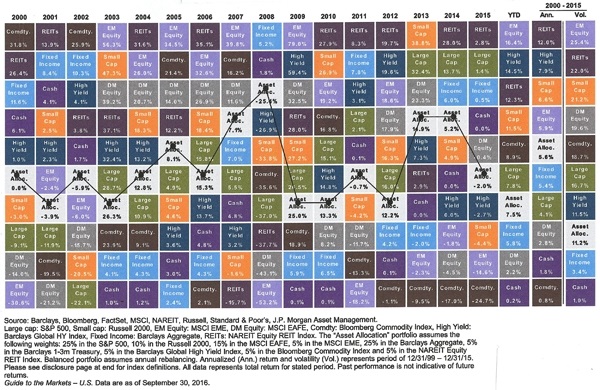
Diversification:
Portfolio volatility is a function of the correlation of the component asset classes. Those asset classes that are less correlated provide the best form of diversification. The same principle applies to individual securities within the same asset class. Asset allocation does not assure or guarantee better performance and cannot eliminate the risk of investment losses. Diversification cannot eliminate the risk of investment losses.